Monday, 6 April, 2026
Strength Training for Longevity: Your Muscles Are a Longevity Organ


Your Muscles Are a Longevity Organ
You’re 72, walking across a parking lot, and your shoe catches a crack in the asphalt. What happens next takes about 0.8 seconds. Your ankle needs to absorb the stumble. Your quads need to fire fast enough to catch your shifted weight. Your core has to stabilize before momentum tips you past the point of no return. Whether you recover your balance or hit the ground depends on decisions you made decades earlier.
This isn’t a scare tactic. It’s biomechanics. And it raises a question worth sitting with: what do you want to be capable of at 80?
Skeletal muscle is the largest organ system in the human body, and it does far more than move you from place to place. It’s a metabolic reservoir, responsible for roughly 80% of insulin-stimulated glucose uptake. It’s an endocrine organ, secreting myokines that regulate inflammation, brain health, and immune function. And it’s mechanical insurance against the falls, fractures, and hospital stays that shorten lives after 65. Muscles are movement. Movement is life. And both erode faster than most people realize.
The clinical term is sarcopenia, and here’s what most people get wrong about it: the strength loss comes first. Years before you notice your arms looking thinner, your nervous system is already losing its ability to recruit muscle fibers quickly and forcefully. By the time mass visibly declines, the functional deficit has been accumulating for a decade.
Muscle isn’t vanity. It’s infrastructure. And most adults are letting it erode without realizing what they’re losing.

The Dose That Actually Matters
Here’s where it gets interesting for the data-minded: how much resistance training do you actually need?
Momma et al. (2022) published a large meta-analysis looking at resistance training duration and all-cause mortality. The relationship follows a J-curve. The sweet spot for mortality reduction sits at roughly 30 to 60 minutes per week. Not per day. Per week. More training still helps, with diminishing returns above 3 hours weekly, but the sharpest drop in risk comes from moving off zero.
When you combine resistance training with aerobic exercise, the numbers shift further. The same Momma 2022 meta-analysis found that combined resistance plus aerobic activity is associated with roughly 40% lower all-cause mortality versus neither. That's a larger effect size than most pharmaceutical interventions for chronic disease.
Three things to be honest about with this evidence.
- First, the mortality data is observational. People who strength train differ from people who don’t in ways studies can’t fully control for. The 40% figure is real, but it’s an association, not a guaranteed causal effect.
- Second, the dose-response curve means the biggest return comes from doing something versus nothing.
- Third, none of this research required gym memberships or complicated periodization.
The floor and the sweet spot are different numbers. The floor is two sessions of 20 to 30 minutes per week. That’s the minimum to capture the mortality benefit, and it’s your fallback for a stressful week when everything else falls apart. Two sessions fit into any week, even a bad one. If that’s all you ever do, you’re still ahead of most people. The floor alone is worth protecting.
If you want to go further and actually build or maintain meaningful muscle and strength, the sweet spot sits higher: three sessions of 45 to 60 minutes per week. The reason is volume. Hypertrophy, the process of making muscle fibers larger, requires roughly 10 to 20 challenging sets per muscle group per week (Schoenfeld 2017, Baz-Valle 2022). You can’t fit that into two 20-minute sessions.
Strength, interestingly, is cheaper. Androulakis-Korakakis (2020) showed that even a single hard set taken near failure can improve one-rep max strength. So if your goal is pure force production rather than muscle size, the minimum dose is lower than most people assume.
The practical takeaway: aim for the sweet spot, protect the floor. If you hit two sessions in a rough week, you didn’t fail. You maintained the most important habit.
What “Enough” Looks Like
A sufficient week of resistance training doesn’t require two-hour sessions or a wall of equipment. It requires intention and a few principles.
Compound movements that cover the basic human patterns. A squat pattern, a hinge pattern (picking something up off the ground), a push, and a pull. These four categories, trained consistently, cover most of the muscle mass and functional capacity that matters for longevity. You don’t need fifteen exercises. You need four to six done well.
Effort that’s genuinely hard in the last two to three repetitions. This is where most people leave results on the table. If you finish a set and could easily do five more reps, the stimulus isn’t strong enough to drive adaptation. You don’t need to train to absolute failure, but you need to be in the neighborhood. Research consistently shows that the last few hard reps are where the majority of the adaptive signal comes from.
Progressive challenge over months, not days. If the demand never increases, the adaptation plateaus. Over the course of months, something should progress: the load, the range of motion, the control, the volume. Small increases compound over time. Don’t just do the same exercise with the same reps and same weights for months and months.
No periodization scheme required. No specific exercises to memorize. Those four things, done consistently for a year, will make you meaningfully stronger. Done for a decade, they build a reserve that compounds in value as you age.
What Changes With Age
Your relationship with muscle isn’t static. What your body does with training at 30 is fundamentally different from what it does at 55 or 70.
Build and Invest (roughly 25 to 45). Your neuromuscular system is at or near peak capacity. Motor unit recruitment is efficient. Recovery is relatively fast. The hormonal environment supports muscle protein synthesis without much coaxing.
Most readers are probably here. The strategic reality: what you build now is what you’ll defend later. Every kilogram of muscle mass, every neural adaptation, every tendon that thickens under progressive load becomes part of your reserve. You’re not training for this year. You’re training for the version of you that needs to catch a stumble in a parking lot.
The mistake in this phase is treating strength training as optional while aerobic fitness gets the cultural spotlight. That framing costs people decades of structural investment. You’re not behind if you’re starting now. You’re ahead of almost everyone who hasn’t started at all.
Defend the Base (roughly 45 to 65). Something shifts in your mid-40s. Anabolic resistance increases, meaning your muscles need a stronger training stimulus to trigger the same protein-building response they used to produce easily. Recovery takes longer. Connective tissue becomes more temperamental.
This doesn’t mean you can’t build muscle. You can. But the trajectory changes from accumulation to strategic preservation. The people who thrive here shift their identity from “getting stronger” to “staying strong.” That’s not a downgrade. It’s a realistic adaptation to biology.
Menopause changes the equation in ways most fitness content ignores. The decline in estrogen during perimenopause and menopause accelerates muscle loss, and it catches many women off guard. Estrogen plays a direct role in muscle protein synthesis, tendon health, and recovery capacity. The standard advice of “just lift heavy” doesn’t account for the hormonal shift that makes the same training stimulus less effective and more recovery-demanding. Women in this phase aren’t failing at training. The biological context changed underneath them. Adjusting expectations, recovery protocols, and training volume isn’t weakness. It’s intelligence.
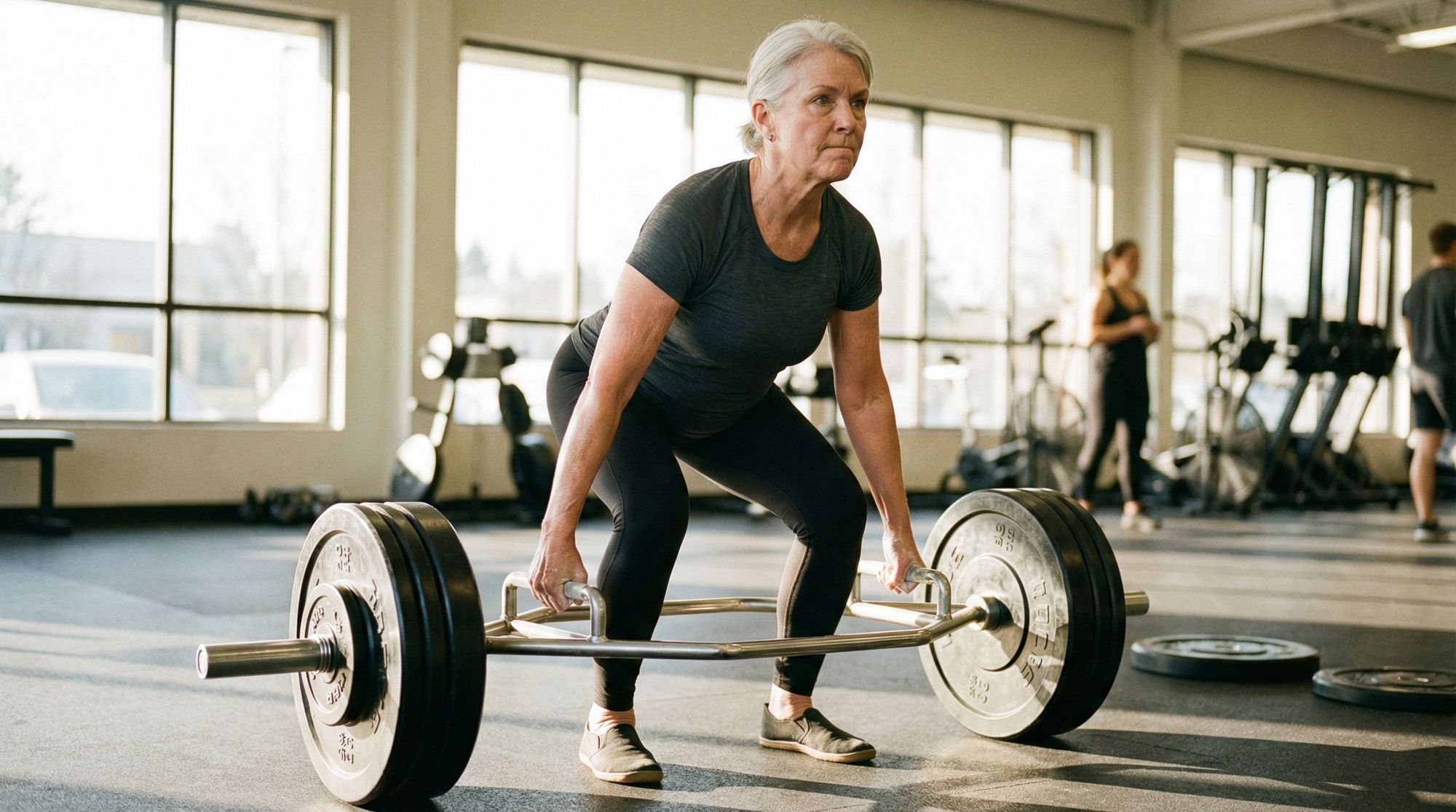
Functional Resilience (65 and beyond). After 65, the conversation is about capacity. Can you get off the floor unassisted? Can you carry groceries up a flight of stairs? Can you survive a week of bed rest during a hospital stay without losing so much muscle that you can’t walk out?
That last point deserves attention. Hospitalization-related muscle loss in older adults triggers a cascade: weakness leads to falls, falls to fractures, fractures to immobility, immobility to further muscle loss. People who enter that cycle with more reserve exit with their independence intact. Those who enter it depleted often don’t recover.
Training at this age doesn’t need to look impressive. It needs to be consistent, safe enough to sustain, and challenging enough to maintain neural drive and basic strength.
The “Bulky” Myth
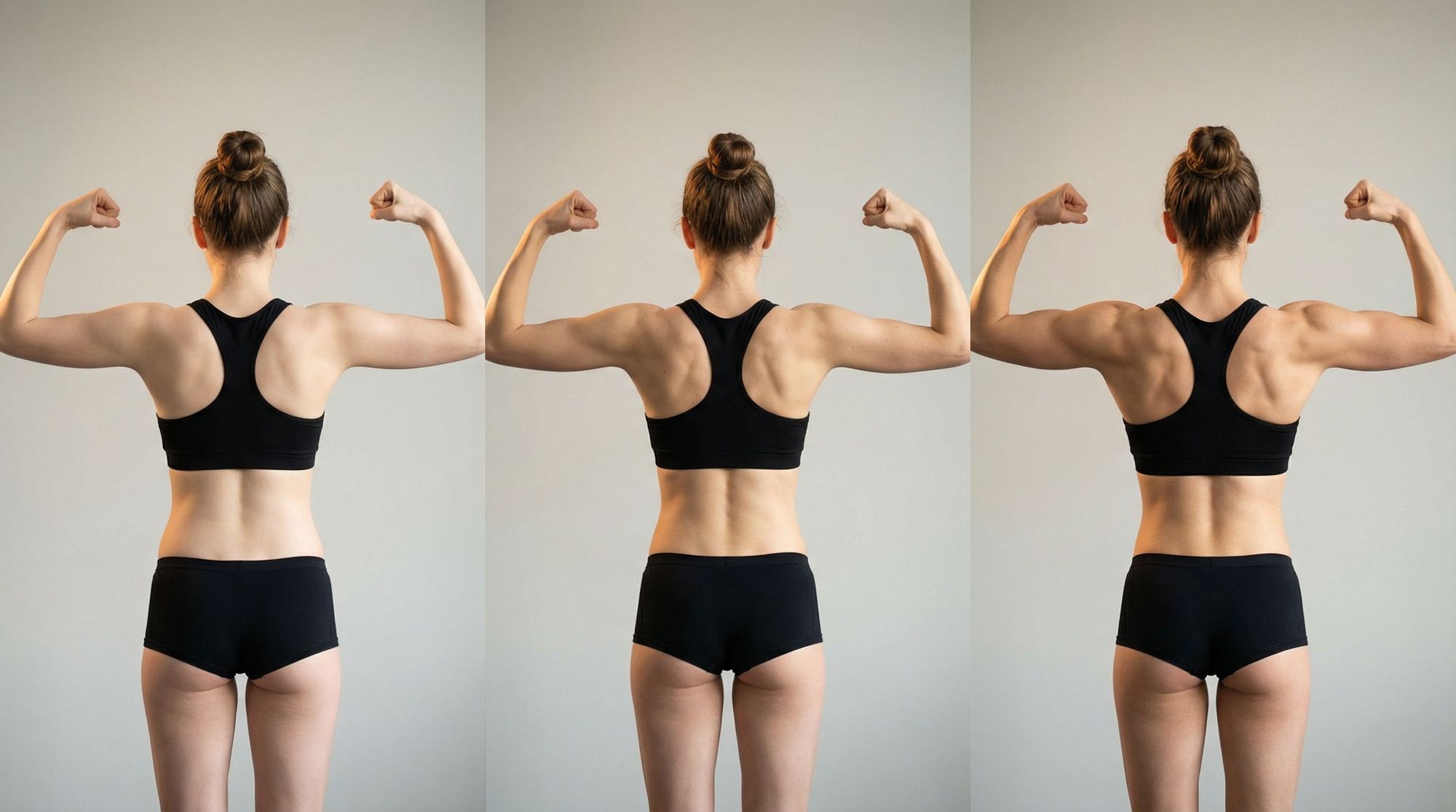
There’s a persistent fear, almost exclusively aimed at women, that resistance training will make them bulky. The data says the opposite of what the fear assumes. And nobody stumbles into a gym and comes out “too big.” Building meaningful muscle is a slow, deliberate process that takes years. If you ever feel like one area is developing more than you want, you just stop training that muscle. It’s that simple. You’re in control the entire time.
This fear doesn’t exist in a vacuum. Decades of media have framed the ideal female body as thin, not strong. Research shows “fear of looking big and bulky” is one of the most commonly reported barriers keeping women out of the weight room (Boddy et al. 2022). Women who visibly build muscle face measurable social penalties: rated as less attractive, assigned masculine personality traits, expected to have worse life outcomes (Musolino et al. 2022). The “strong is the new skinny” movement has shifted the conversation, but analysis of fitspiration content shows it mostly repackaged the thin ideal with a fitness veneer — toned, but not too muscular (Tiggemann & Zaccardo 2018). Women are now expected to be thin and fit, which is arguably more restrictive than either standard alone.
The biology tells a different story. Roberts (2025) found that women gain muscle at roughly the same relative rate as men when following equivalent training programs. But women start with approximately 60% less muscle mass and produce 5 to 10 times less testosterone. The math is straightforward: the same percentage gain applied to a smaller base, with a fraction of the anabolic hormone, produces a very different outcome than what most people picture.
The physiques that trigger the “bulky” fear typically require years of dedicated surplus eating, extremely high training volumes, and often pharmacological assistance (steroids). Casual strength training three times a week doesn’t produce that result. What it does produce is denser bones, better posture, improved body composition, and the functional capacity to live independently for longer.
Strength training won’t accidentally make you look like a bodybuilder any more than jogging will accidentally qualify you for the Olympics. So go as hard as you can. If you’re genetically blessed, you’ll see fast results. Most likely, you’ll have to put in a lot of work to grow. That’s a feature, not a bug.
The Honest Gaps
The evidence for resistance training and longevity is strong in broad strokes but thin in specifics. This is where the science gets honest about what it doesn’t know yet.
Recovery dose for adults over 60 is under-studied. Most resistance training research uses young or middle-aged subjects. The handful of studies focusing on older adults often use standardized protocols that don’t account for the massive individual variation in recovery capacity after 60. How much rest between sessions? How should volume adjust for someone on blood pressure medication? The guidelines exist, but they’re extrapolated from younger populations more than most practitioners admit.
Post-menopausal hypertrophy response is mixed. Some studies show that post-menopausal women can build muscle at rates comparable to pre-menopausal women with sufficient stimulus and protein. Others show a significantly blunted response. The discrepancy likely comes down to individual variation in hormonal status, training history, nutrition, and genetics. Blanket statements in either direction are premature.
Individual variation is large and poorly characterized. Two people following the same program, at the same age, with the same diet, can have meaningfully different outcomes. Genetics, sleep, stress, medication interactions, prior training history. The list of moderating variables is long, and most studies control for only a few. Population-level recommendations are useful starting points, but your response to training is ultimately an experiment of one.
None of this means the evidence is weak. It means the evidence is incomplete in the places where personalization matters most. That’s not a reason to wait. It’s a reason to start, pay attention to your own response, and adjust accordingly.
How This Connects
Resistance training is one pillar of the25percent’s four-pillar framework, alongside Zone 2 aerobic work, high-intensity intervals, and mindfulness practice. As outlined in Article 01, these pillars interact: muscle mass improves glucose disposal, aerobic fitness improves recovery between sessions, and stress management improves the sleep where most muscle repair happens.
The Real Question
The uncomfortable baseline: most adults do zero resistance training. Not “not enough.” Zero. The gap between public health recommendations and actual behavior is one of the widest in preventive medicine (Bennie et al. 2020).
If that’s you, the single highest-impact change you can make for your long-term health isn’t optimizing your program. It’s starting one. The dose-response curve is steepest at the beginning. Going from nothing to something produces a disproportionate return. Even hitting the floor of two short sessions per week puts you ahead of the majority.
The25percent app is built around making that transition practical: not a perfect plan, but a sustainable one calibrated to where you actually are.
Peter Attia frames it as a question worth sitting with: what do you want to be capable of at 80? Carrying your grandchild up the stairs. Getting off the floor after playing with the dog. Walking out of a hospital under your own power after a rough week. Every one of those capabilities traces back to the muscle you either built or didn’t. The answers are yours. The training starts now.
Medical Disclaimer and Important Notice: The content, programs, and information provided by the25percent are for educational and informational purposes only and are not intended as a substitute for professional medical advice, diagnosis, or treatment from a qualified healthcare provider. Nothing herein should be interpreted as personalized medical guidance. Before beginning any new exercise program, training protocol, or making significant lifestyle changes discussed in our content—particularly if you have pre-existing medical conditions, take medications, are pregnant or nursing, or have cardiovascular, respiratory, or musculoskeletal conditions—you must consult with a licensed physician or qualified healthcare professional. This is not optional; it is essential. The protocols and information we share represent general guidance based on current scientific evidence and research. Individual responses to training, nutrition, and lifestyle interventions vary significantly based on genetics, health status, age, and other factors. We do not guarantee specific results or health outcomes. If you experience chest pain, severe shortness of breath, dizziness, or any other emergency symptoms during or after following our content, seek immediate medical attention by calling emergency services. You assume full responsibility for your decisions and actions related to the use of our content. The25Percent and its creators are not liable for any injury, health complications, adverse effects, or damages resulting from your use or misuse of this information. By accessing our content, you acknowledge and accept these terms.